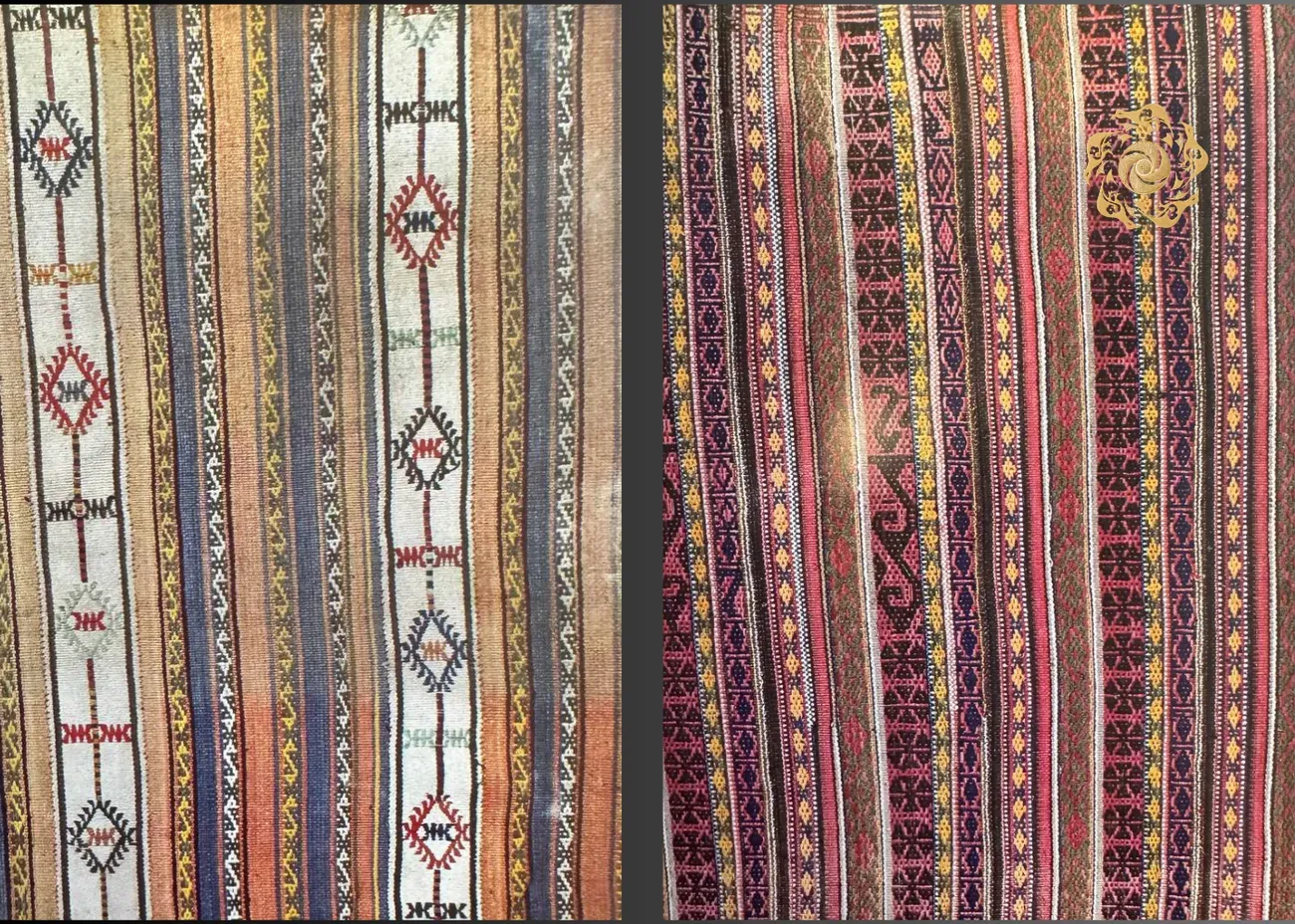
The history of Andijan carpets goes back to the Khidirsha clan of the Qandi tribe of the Kyrgyz people. According to historical sources, the Khidirsha clan in ancient times lived in Ura-Tyube (the territory of present-day Khojaabad and Kurgantepa districts). The women of the clan wove carpets, saddlebags, travel bags, and chavadon (a sack-like vessel) necessary for daily life and the yurt, and also prepared special carpets for sale in the bazaars based on orders.
In the late 19th and early 20th centuries, Khidirsha carpets were considered the leading product of the famous carpet market in Andijan and gained fame throughout the Fergana Valley. It also spread to Tashkent, Samarkand, and Bukhara through trade relations.
The decorations of Khidirsha carpets are rich and diverse. It contains many totem and astral symbols. Symbolic patterns consisting of dozens of shapes, such as goose's paw, willow leaf, grape leaf and fruit, apple sapling, ram's goat, dog's tail, tiger's heel, eagle's eye, amulet, ring, moon, and star, prevail. The decoration of carpets, in terms of compositional structure, consists of a plane and a border, the patterns are often placed in the form of a grid, such as a rhombus, polygon, circle, or in the form of a grid with small patterns around large turunjs in the form of rhombuses.
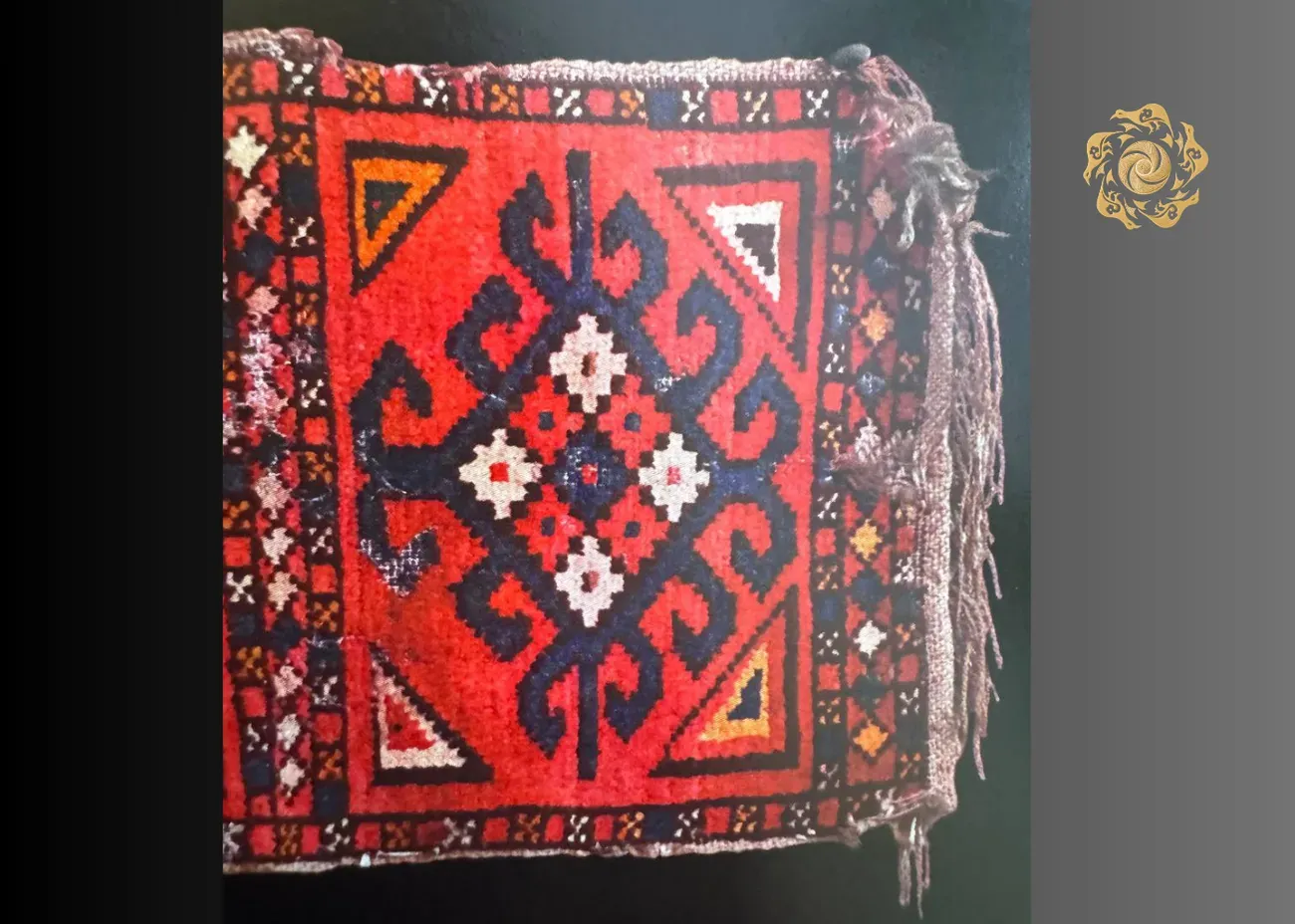
According to ethnographer V.Moshkova, the Khidirshi people also used patterns from East Turkestan, Bashir, as well as Iranian carpets for weaving carpets for sale. In particular, the scorpion pattern on Persian carpets, reminiscent of almond and bush patterns, testifies to the influence of Persian carpet weaving.
Usually, the quality of carpets is determined by the density of their weaving, the composition of raw materials, and the quality of the dyes. The density of Khidirsha carpets averaged 700-800 bundles per 1 dm2, the highest quality - 900-1000 bundles. The base is made of a mixture of wool, yarn, and sometimes silk, and the feathers are woven from high-grade camel and goat wool.
Later, in Shirmonbulak, carpets were made from cotton yarn spun on a hand mill. Such carpets are called "terma." They are woven on a special loom with dimensions of 20, 40, 60 cm in width, and these widths are sewn side by side. A narrow strip of black fabric is sewn around it and reinforced. Selected carpets were widely used in everyday life.