
This mausoleum, one of the wonders of medieval architecture, served as a major mausoleum for the Samanid dynasty, which ruled the country for over a hundred years in ancient times. This address was called Novkand, later Chahar Gumbazan (Four Gumbazes) Street.
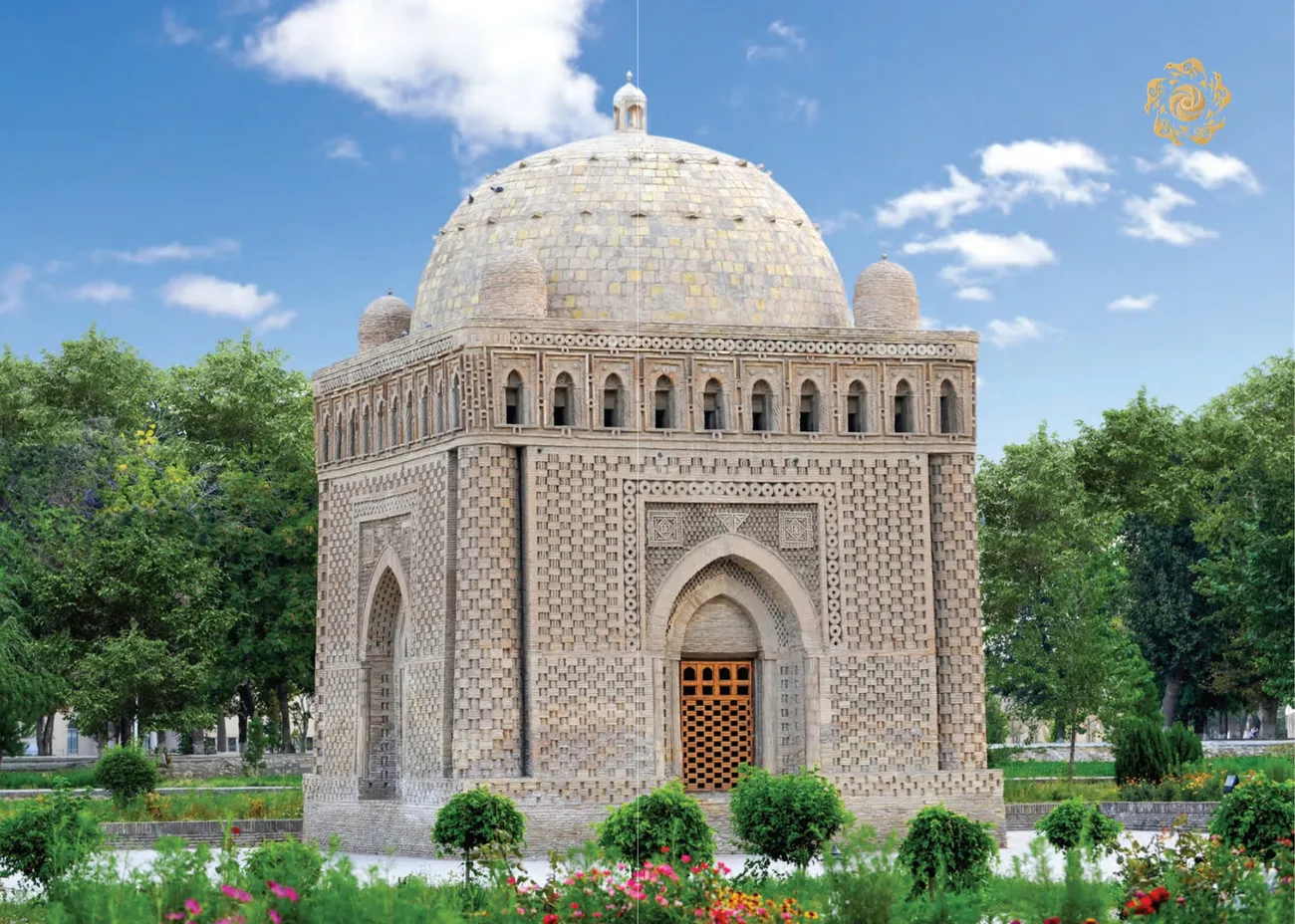
After the collapse of the Samanid dynasty (999), the size of the family burial ground gradually decreased, the mausoleums were destroyed, and in the 16th–18th centuries, residential areas emerged on its territory. At the beginning of the 20th century, a small cemetery surrounded by a high wall with a gateway to the east was preserved around the building of the only surviving mausoleum. In the 1930s, the structure was cleaned from the outside, researched, and restored.
The volumetric-spatial composition of the building expressed the appearance of a cube, slightly narrowing upward, covered by the hemisphere of a large dome with four small domes at the corners. The mausoleum, which is square in structure (10.8×10.8 meters, the total height with a bouquet of flowers is 15.0 meters, the thickness of the walls is 1.8 meters), faces the four corners of the world. The building itself rises on a one-meter-high platform, reinforced by thick triangular columns with no columns at the corners.
All facades of the mausoleum are identical to each other; on the axis of each, there are rectangular arched windows, and on the eastern side, there is an entrance and exit to the mausoleum. The facade and the interior are decorated with intricate and colorful embossed patterns made of fired bricks, the flat surfaces of which harmonize with the bricks laid on the walls. Decorative elements made of brick and carved ganch were also used.
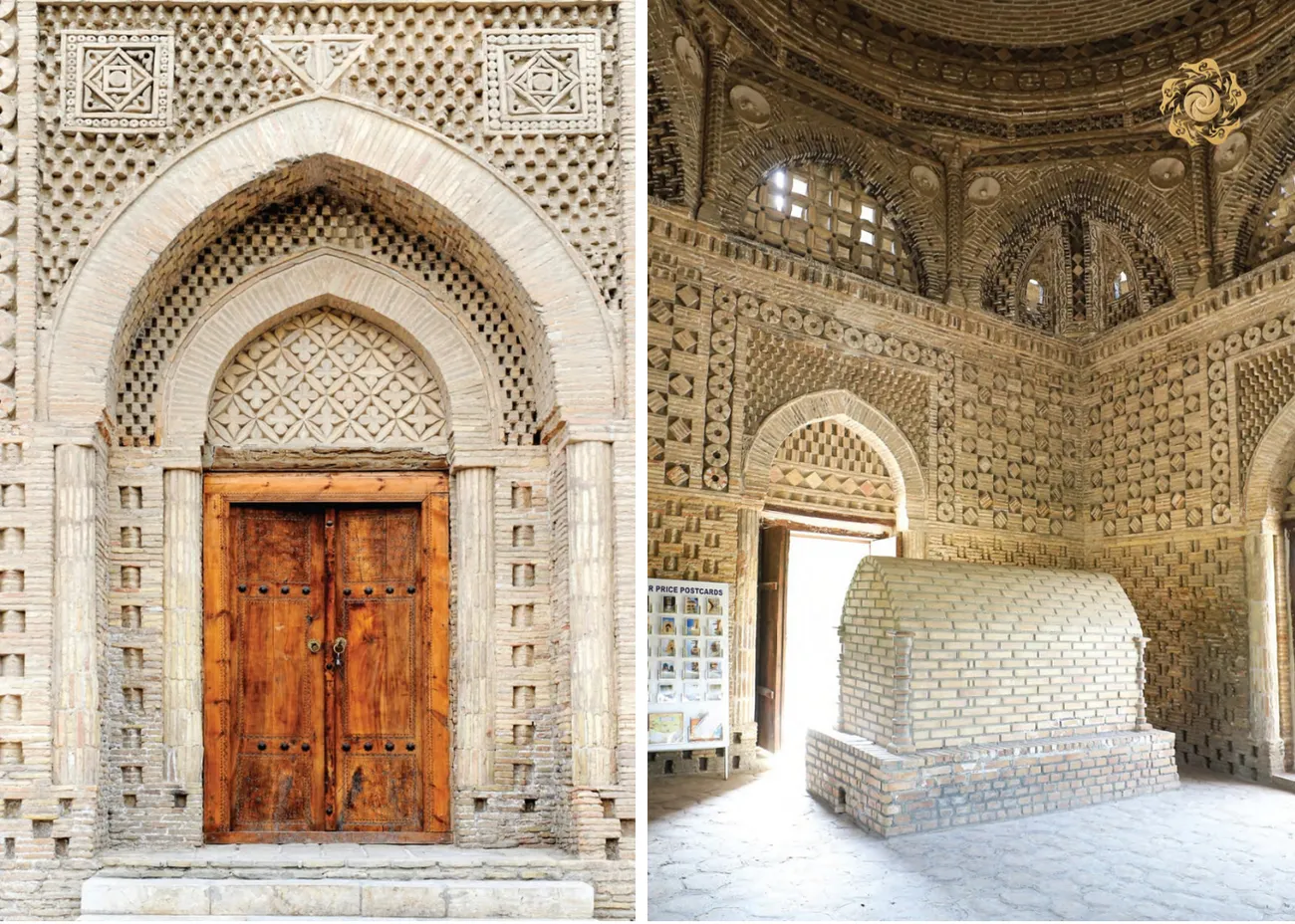
In the southeastern corner of the mausoleum, there is a large crypt—the tomb of Padishah Ismail Samani or Hazrat Sultan, which has openings in its small transverse walls.